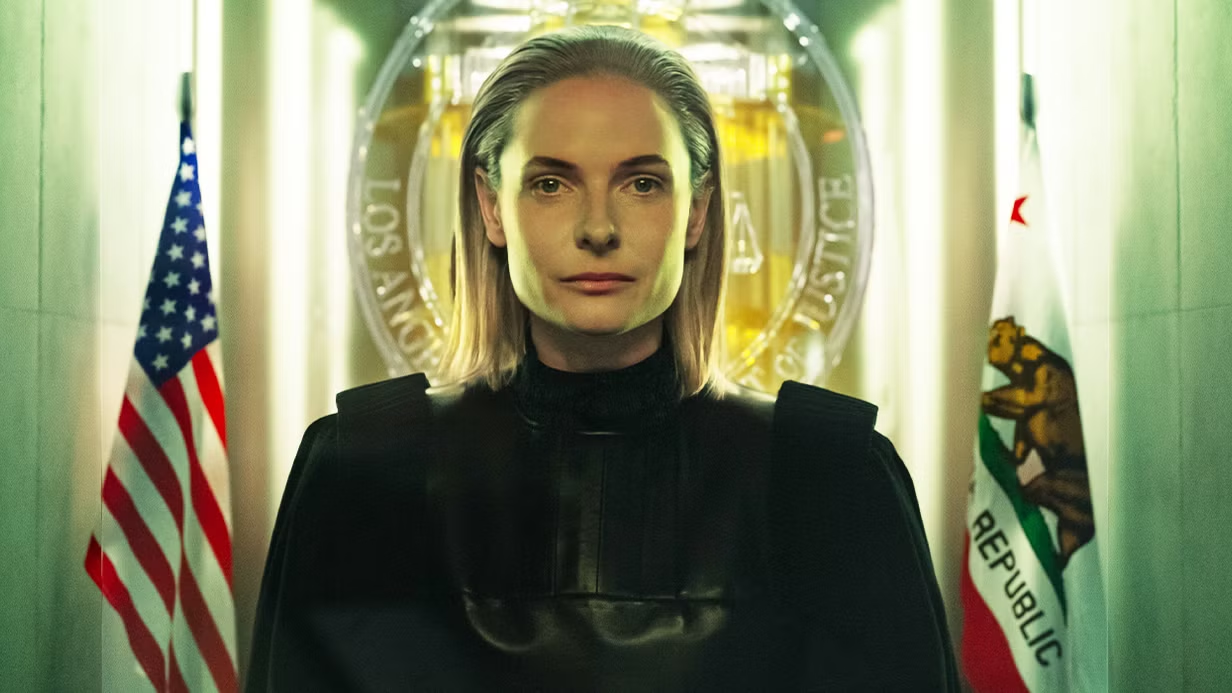
Rebecca Ferguson’s “Mercy” Receives Mixed Reception, Fails to Impress Critics and Audiences Alike
Rebecca Ferguson’s latest sci-fi thriller, Mercy, has arrived with much anticipation but is quickly losing momentum due to disappointing reviews and box office projections. Starring Ferguson alongside Chris Pratt, the movie is currently on track for a modest $10 million debut over the weekend, a far cry from its expected commercial success. With a 24% rating on Rotten Tomatoes and a lack of a critics’ consensus, Mercy is struggling to gain traction with moviegoers and critics alike.
A Rough Start for Mercy at the Box Office
Despite the high-profile cast and intriguing premise, Mercy is facing a tough battle at the box office, primarily due to a series of negative reviews. The film’s limited appeal is compounded by the ongoing dominance of Avatar 3: The Way of Water, which is nearing the end of its run. Mercy’s underwhelming opening is indicative of the challenges it faces, particularly when it has to contend with Avatar’s lingering success and its own critical shortcomings.
The movie’s slow start seems set to further hurt its standing in a competitive marketplace. This marks a significant disappointment for both the cast and the filmmakers, especially when the film was expected to generate considerable buzz. Mercy could make an impact on trivia nights if it somehow surpasses Avatar: Fire and Ash’s dominance, but that remains to be seen.
Ferguson and Pratt in a Sci-Fi Thriller That Misses the Mark
Directed by Timur Bekmambetov, who is known for his work on the screenlife genre (films shot entirely from the perspective of screens), Mercy follows Pratt’s character as he tries to clear his name after being falsely accused of his wife’s murder. He’s judged by an AI that he helped create, a high-tech twist that underpins the film’s premise. While Ferguson’s performance has garnered some praise, the overall film has failed to connect with audiences.
In fact, Mercy has received some of the lowest ratings for Ferguson, whose involvement in two genre-defining sci-fi franchises — Dune and Silo — is widely celebrated. The movie has earned a lower score than her previous roles in films like Reminiscence and The Girl on the Train. However, it does manage to top the notorious The Snowman (2017), which suffered from severe production issues, including being released incomplete.
Timur Bekmambetov’s Dedication to the Screenlife Format
Bekmambetov, who has carved out a niche for himself in the screenlife genre, has struggled to maintain his Hollywood appeal. Known for the 2008 comic book adaptation Wanted, he has not directed a major Hollywood film in over a decade. His latest offering, Mercy, which is produced on a reported budget of $60 million, seems to show his continued dedication to the format, but it’s unclear whether this style is what modern audiences want.
In a genre known for its confined, often claustrophobic settings, the film attempts to push the boundaries of the medium. However, Mercy’s narrative and pacing struggles to fully capitalize on its innovative concept. Critics argue that while the technology of AI and the ‘screenlife’ format hold potential, the execution ultimately falls short of expectations.
Chris Pratt’s Post-Franchise Transition Faces Obstacles
For Chris Pratt, Mercy marks a notable shift after a decade of starring in massive franchises like Guardians of the Galaxy and Jurassic World. The film follows his character as he attempts to solve the mystery surrounding his wife’s death, all while being judged by the AI system he helped create. This marks a departure from Pratt’s usual blockbuster roles, but unfortunately, it hasn’t proven to be a successful transition.
Despite the promising concept and star-studded cast, Mercy appears to be suffering from weak reception both critically and commercially. For Pratt, it’s a tough reminder that shifting from blockbuster franchises to standalone films can be fraught with risks.
The Road Ahead for Mercy and Its Legacy
As Mercy faces an uphill battle at the box office and with critics, it remains to be seen whether the film can recover in the long term. While the movie could have had the potential to appeal to sci-fi fans and thrill-seekers, the negative reception suggests that it may quickly fade into obscurity. Despite the film’s flaws, however, Mercy offers a glimpse into the future of the screenlife genre, and with its unique blend of AI-driven narratives and technology-based filmmaking, it remains an intriguing concept.
Unfortunately, the execution doesn’t seem to live up to its ambitions, and Mercy may ultimately be remembered as a missed opportunity in the careers of its talented cast and visionary director.