In the Blink of an Eye Review: Sundance Film Falls Flat
Full Article:
In the Blink of an Eye Review: Sundance Film Falls Flat
In the Blink of an Eye review reveals a disappointing sci-fi drama that premiered at Sundance Film Festival. The film has big ambitions but delivers shallow execution. It attempts to weave together three different timelines spanning over 47,000 years. Unfortunately, it collapses under the weight of its own clichés. The premise sounds intriguing on paper. However, the actual viewing experience feels like a cheap television movie. It never becomes the thoughtful exploration of human connection it wants to be.
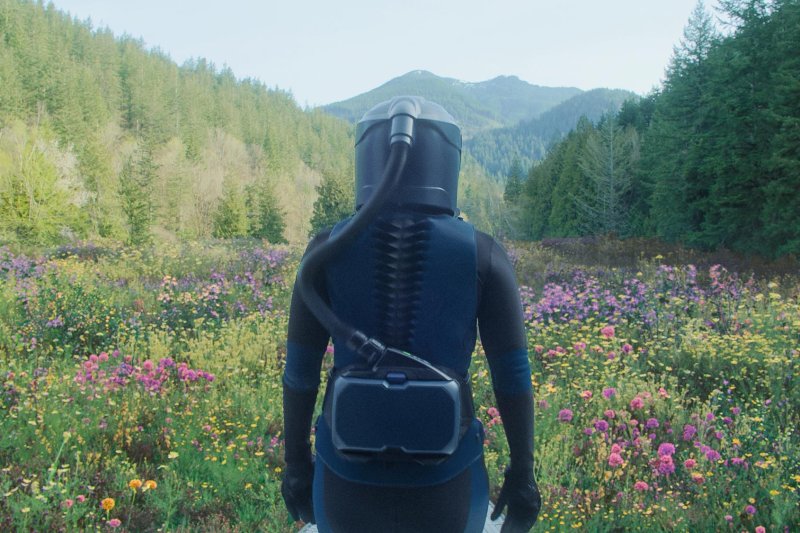
The film follows three interconnected stories that play out simultaneously. In 45,000 B.C.E., a Neanderthal family struggles to survive in prehistoric times. Jorge Vargas, Tanaya Beatty, and Skywalker Hughes portray this ancient family. Meanwhile, in 2025, Claire is a Princeton doctoral student in anthropology. Rashida Jones brings this character to life convincingly. Her casual relationship with Greg unexpectedly becomes serious. Daveed Diggs plays Greg with natural charm. Then in 2117, Kate McKinnon’s character Coakley faces a different challenge. She’s two-thirds through a 300-year solo space mission. Only artificial intelligence keeps her company. This In the Blink of an Eye review finds the ambitious structure could have worked. Nevertheless, the film never makes these storylines feel genuinely connected.
The connections between timelines are painfully obvious from early on. Claire’s research focuses on a Neanderthal fossil. It clearly belongs to one of the prehistoric characters we’re watching. However, the link between present and future remains hidden until the conclusion. When it’s finally revealed, the connection feels contrived and cringeworthy. Rather than providing a satisfying moment, the reveal emphasizes how superficial the approach is. The film’s treatment of its material feels disappointingly shallow.
Claire’s storyline forces her to leave Princeton when her mother falls ill. This creates a narrative about balancing career with family and romance. Unfortunately, this In the Blink of an Eye review must note the reliance on tired stereotypes. Her story leans heavily on clichés about women “trying to have it all.” Instead of offering fresh perspective, the film settles for hackneyed ideas. These feel decades out of date. Furthermore, Claire is portrayed as emotionally disconnected. She accidentally says “I love you” during a Zoom call with Greg. The moment is meant to be endearing but comes across as forced.
Similarly, Coakley’s future storyline presents a spacecraft crisis. This threatens the entire mission. Both end-of-life care and long-distance relationships are serious topics. They affect real people in unique ways. Therefore, they deserve more thoughtful treatment than shallow stereotypes. Instead of honoring complexity, the script reduces them to formulaic plot points. Any viewer can predict what happens next.
Each of the three timelines jumps forward many years near the film’s conclusion. This only amplifies the clichéd nature of the storytelling. Interestingly, the Neanderthal storyline works better than the others. Perhaps it’s because we don’t need to understand their language. We can focus on the visual storytelling instead. However, Claire’s family story races through so many years. Major life moments feel rushed and awkward. They never feel earned or meaningful. Meanwhile, when the future storyline accelerates rapidly, it becomes problematic. It reduces itself to something resembling a low-budget Syfy channel movie. This is far from the thoughtful science fiction it aspires to be.
The cast does their best with the material they’re given. Rashida Jones, Daveed Diggs, and Kate McKinnon all deliver respectable performances. They work hard despite the script’s limitations. Nevertheless, this In the Blink of an Eye review concludes the film does them a disservice. These talented actors are trapped in thinly written roles. They deserve better material. Their skills could explore the emotional depths these characters should possess.
From a scientific perspective, the film deserves some credit. It attempts to correct common misconceptions about Neanderthal intelligence. It also addresses the so-called “missing link” in human evolution. These are important corrections to make. Popular culture has often portrayed Neanderthals inaccurately. However, the irony is hard to miss. The film wants to show respect for prehistoric humans. Yet it shows no such respect for its own fictional characters. The reliance on clichéd storytelling undermines this goal. Additionally, late in the film, a character casually introduces DNA modification. This could prevent aging, they suggest. But they never acknowledge that overpopulation is already a serious concern. This happens even with normal human lifespans. This lack of thoughtful consideration undermines the film’s scientific credibility.
The technology depicted in the future segments feels particularly unconvincing. Star Trek, for example, established a consistent canon for its futuristic technology. Audiences could believe in that universe. In contrast, In the Blink of an Eye doesn’t invest the necessary time. It fails to create believable future tech. Consequently, everything feels fake and poorly thought out. Scenes that should feel grounded in scientific possibility don’t. Instead, they feel like cheap special effects without substance.
The 2012 film Cloud Atlas successfully managed an ambitious structure. It interwove six different stories across past, present, and future timelines. It maintained intelligence and emotional depth throughout. That film demonstrated how multi-timeline narratives can work with care and vision. In comparison, In the Blink of an Eye attempts only half as many storylines. Yet it still collapses under the weight of its own ambitions. Where Cloud Atlas found meaning in connections, this film only finds superficial links. It offers tired emotional beats instead of genuine insight.
What makes this In the Blink of an Eye review particularly disappointing is wasted potential. The idea of connecting human experiences across vast stretches of time is compelling. Moreover, examining how love, loss, survival, and ambition remain constant sounds promising. Despite changing circumstances, these themes are universal. This could have yielded genuine insights. Instead, the film settles for surface-level observations. These come wrapped in predictable plotting. Furthermore, by rushing through significant life events, the story fails emotionally. It never allows audiences to truly connect with characters. Their struggles feel distant rather than relatable.
The film premiered Monday at the Sundance Film Festival. Audiences typically expect innovative storytelling there. They come for fresh voices in independent cinema. Unfortunately, In the Blink of an Eye feels more like a collection of familiar tropes. It doesn’t offer an original vision. While Sundance has launched many groundbreaking films over the years, this one seems different. It’s destined to be forgotten quickly. It will stream on Hulu starting February 27. Even with the convenience of home viewing, it’s hard to recommend. Why spend time on a film that respects neither its audience’s intelligence nor its premise? Ultimately, this In the Blink of an Eye review finds the film blinks and misses its opportunity. It could have said something meaningful about human connection across time. Instead, it delivers cheap thrills and cheaper emotions that fade immediately.