Hayao Miyazaki’s Most Iconic Works: A Dive Into His Five Greatest Masterpieces
Miyazaki’s Enduring Legacy in Animation
Few directors have left such an indelible mark on the world of animation as Hayao Miyazaki. As one of the co-founders of Studio Ghibli, Miyazaki has crafted films that have transcended cultural and generational boundaries, captivating audiences with their imaginative worlds, compelling characters, and deep themes. His films are celebrated not only for their stunning animation but also for their ability to explore complex ideas such as environmentalism, humanity’s relationship with nature, and the journey of self-discovery.
Miyazaki’s career is defined by an exceptional range, from fantastical adventures to poignant explorations of human emotion and societal issues. However, among his impressive body of work, a select few films have achieved the status of true masterpieces. These films showcase his storytelling brilliance and artistic innovation, and they remain timeless classics within the anime genre and beyond.
In this article, we will delve into five of Miyazaki’s greatest works, examining what makes them stand out and why they continue to resonate with audiences worldwide. While there are many excellent films in Miyazaki’s filmography, these five represent the pinnacle of his creative achievements, each offering a unique and unforgettable cinematic experience.
5. Nausicaä of the Valley of the Wind (1984): A Dystopian Tale with a Green Heart
Miyazaki’s Nausicaä of the Valley of the Wind is a groundbreaking film that blends science fiction, environmentalism, and adventure into a unique cinematic experience. Set in a post-apocalyptic world where toxic forests and mutated creatures threaten the survival of humanity, the film follows Nausicaä, a princess and environmental advocate, as she struggles to preserve the planet’s fragile ecosystems.
This film is notable for its rich world-building, its complex portrayal of ecological themes, and its powerful protagonist. Nausicaä is a character driven by empathy and a desire to heal the natural world, making her an early example of Miyazaki’s recurring theme of humanity’s connection to nature. Despite being made in 1984, Nausicaä remains as relevant today as ever, particularly as environmental concerns continue to grow globally.
Miyazaki’s focus on the theme of ecological stewardship and the consequences of environmental degradation would be revisited in many of his later works, but Nausicaä stands out as the first major exploration of these ideas, making it a pivotal film in both Miyazaki’s career and in the larger landscape of animated cinema.
4. Castle in the Sky (1986): The Birth of Studio Ghibli and Miyazaki’s Signature Style
Castle in the Sky, Miyazaki’s first film under the newly formed Studio Ghibli, introduced audiences to many of the hallmarks that would define the director’s work: fantastical landscapes, thrilling adventure, and deeply humane characters. The story follows two young protagonists, Pazu and Sheeta, as they embark on a quest to find a legendary floating island, Laputa, while being pursued by pirates and a sinister military faction.
What sets Castle in the Sky apart is its seamless blend of fantasy and adventure, combined with a distinct sense of wonder. The film also introduces several iconic motifs that would appear in Miyazaki’s future works, such as aerial exploration, ancient civilizations, and the battle between technological progress and nature. While the film is a straightforward adventure story, it also offers a nuanced commentary on the dangers of unchecked technological power, a theme that would become central to many of Miyazaki’s later films.
As Studio Ghibli’s inaugural feature film, Castle in the Sky set the tone for the studio’s future direction, establishing Miyazaki as a master of both the craft of animation and the art of storytelling.
3. The Boy and the Heron (2023): A Complex Farewell to an Extraordinary Career
Miyazaki’s The Boy and the Heron stands as his most recent and, perhaps, most complex film. Released in 2023, the film blends fantastical elements with deeply personal themes, exploring the loss of innocence and the passage of time. The story centers around a young boy named Mahito, who embarks on a journey through a mystical world after the death of his mother.
The film is an introspective exploration of grief, memory, and the journey towards self-realization. While it retains the whimsical and imaginative qualities that Miyazaki is known for, The Boy and the Heron is also deeply meditative and melancholy, marking a shift in tone for the director. Given the speculation that this could be Miyazaki’s final film, The Boy and the Heron is a poignant reflection on the themes of legacy, family, and the passage of time, making it a fitting conclusion to his remarkable career.
2. Princess Mononoke (1997): A Dark Fantasy Tale of Man vs. Nature
Princess Mononoke is one of Miyazaki’s most ambitious and complex films. Set in a mythical version of feudal Japan, the film follows Ashitaka, a young warrior who becomes embroiled in the conflict between the human inhabitants of Iron Town and the forest spirits that seek to protect the land. The film is a fierce exploration of the clash between industrial progress and the natural world, with a cast of morally ambiguous characters on both sides of the conflict.
The film’s powerful environmental themes are matched by its stunning animation and intricate world-building. Miyazaki’s portrayal of the forest spirits, such as the boar god Okkoto and the wolf goddess Moro, is breathtakingly beautiful and filled with symbolic meaning. Meanwhile, the human characters, especially the fiercely independent Princess Mononoke (also known as San), offer a more nuanced perspective on the impact of human civilization on the environment.
Princess Mononoke marked a departure from Miyazaki’s earlier, more child-friendly films, exploring darker and more mature themes. Its success at the box office and with critics worldwide cemented Miyazaki’s reputation as a master filmmaker and elevated Studio Ghibli to international prominence.
1. Spirited Away (2001): A Timeless Classic and the Pinnacle of Miyazaki’s Artistry
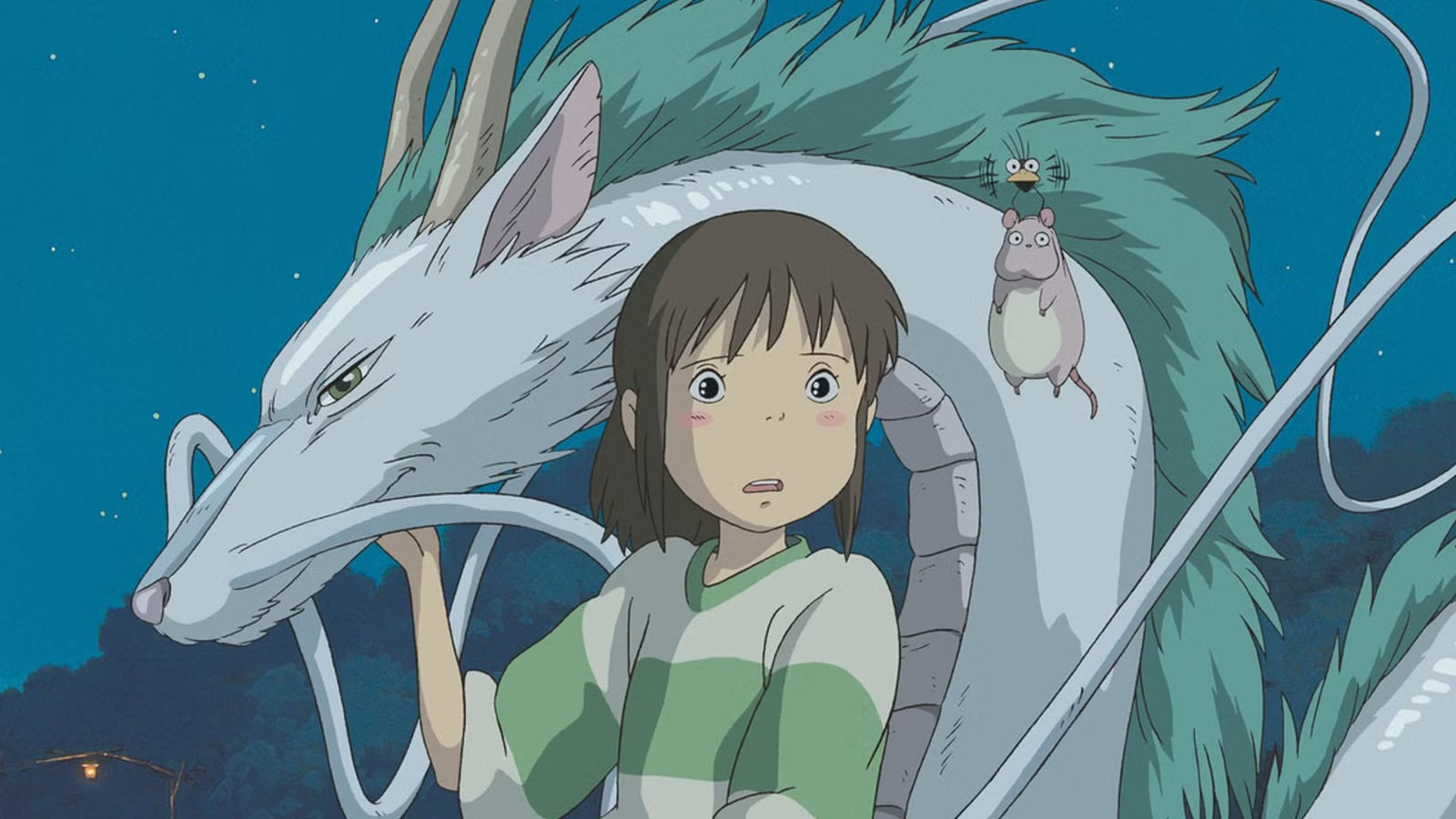
Undoubtedly Miyazaki’s most famous and beloved work, Spirited Away is often considered the pinnacle of his filmmaking career. The story follows Chihiro, a young girl who finds herself trapped in a mysterious, magical world after her parents are transformed into pigs. As she navigates this strange realm, she encounters a wide array of fantastical creatures and characters, all while trying to find a way to rescue her parents and return to the real world.
Spirited Away is a masterpiece in every sense. Its animation is breathtaking, with every frame teeming with intricate detail and lush environments. The film’s storytelling is equally remarkable, weaving together themes of growing up, personal responsibility, and the environmental and social challenges faced by contemporary society.
One of the film’s most striking aspects is its portrayal of a magical world that is both enchanting and unsettling. Miyazaki creates a world that is rich in imagination and cultural symbolism, drawing from both Japanese folklore and his own personal experiences. The film’s ability to blend the fantastical with the emotional depth of its characters sets it apart as one of the greatest animated films ever made.
In 2003, Spirited Away became the first (and still only) animated film to win the Academy Award for Best Animated Feature, a testament to its universal appeal and enduring legacy.
Conclusion: A Legacy of Masterpieces
Hayao Miyazaki’s films are more than just animated features; they are cinematic experiences that explore the human condition, our relationship with nature, and the power of imagination. From the environmental themes of Nausicaä of the Valley of the Wind to the deeply personal journey of The Boy and the Heron, Miyazaki’s works resonate on multiple levels and continue to inspire audiences around the world.
While Miyazaki’s career may be nearing its end, his impact on the world of animation is undeniable. These five films are just a glimpse into his genius, but they represent the very best of what he has to offer. For anyone interested in exploring the world of Studio Ghibli, these masterpieces are the perfect starting point. However, it is essential to remember that, even as he bids farewell to filmmaking, Miyazaki’s legacy will live on in the hearts and minds of generations to come.