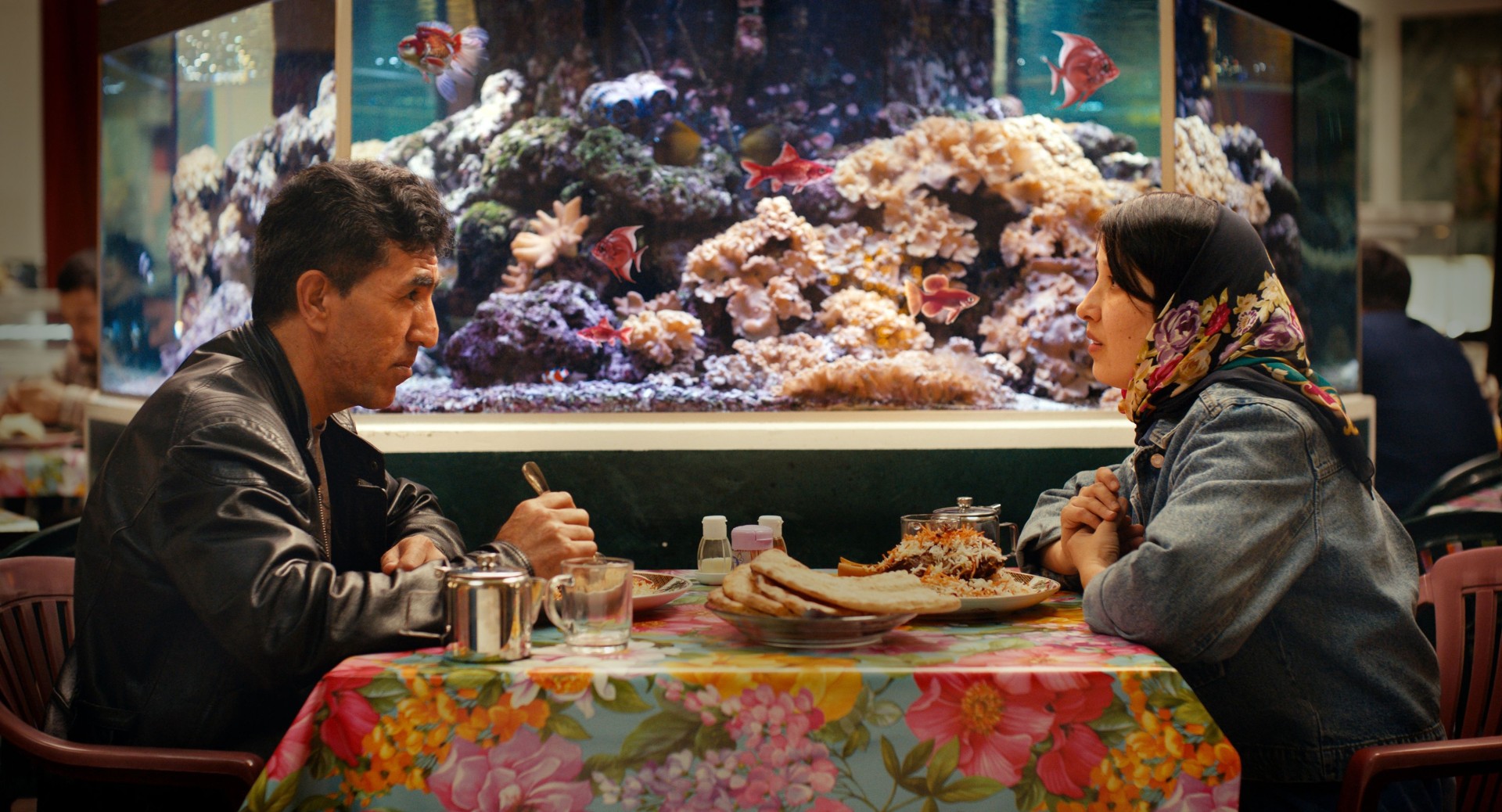
“No Good Men” Breaks New Ground in Afghan Cinema
Shahrbanoo Sadat’s “No Good Men” Afghan film opens the 2026 Berlin Film Festival with a fresh, unexpected tone. It weaves romance, politics, and humor into a story unlike any seen before in Afghan cinema. The film follows a female camerawoman at a Kabul TV station. As she fights to keep custody of her 3-year-old son after leaving her unfaithful husband, she begins a romance with the station’s star male journalist. Their relationship unfolds just before the Taliban took over Kabul in August 2021.
Sadat’s earlier works—Wolf and Sheep (2016) and The Orphanage (2019)—were both dramas that premiered at Cannes’ Directors’ Fortnight. This time, she deliberately chose a different path. “I wanted to make a romantic comedy,” she told Variety. “The popular films about Afghanistan are war dramas. I didn’t want to make another one.”
Her motivation was personal and political. “I come from Afghanistan, a country with no film industry,” she explained. “International filmmakers often misrepresent us.” She sought to create an authentic portrait of an Afghan woman she recognized—one full of complexity, desire, and everyday struggles. “What if I make a rom-com?” she asked herself.
Yet financing the project proved difficult. Many European funds hesitated. They questioned whether a romantic comedy set in Afghanistan fit the moment. “There was this vibe: ‘It’s just inappropriate to finance a rom-com while brave Afghan women are fighting in the streets,’” Sadat recalled. “But I was one of them!” She emphasized that joy, love, and humor still exist—even amid turmoil.
Importantly, the film also challenges stereotypes about Afghan men. “We know Afghan men can be violent,” she said. “But there is another reality. We have good men and bad men. No one ever shows the good ones.” Thus, No Good Men became, in her words, “a love letter to all the good men.”
The film has already drawn attention for two historic firsts in Afghan cinema: an onscreen kiss and the inclusion of a vibrator. Sadat responded with characteristic candor: “Probably the first and the last one!” She added that she once brought sex toys as gifts for friends in Kabul. “For me, it’s just something that happens. My film is not an agenda film.”
She also noted a paradox of conservative societies: “Whenever something is forbidden, the demand for it grows even higher.”
Although the film will premiere for Western audiences, Sadat insists she made it for Afghans. “In my head, I am an Afghan director making films for Afghan people,” she said. Her producer often reminds her the film will screen in European cinemas. But she replies, “That’s not the audience I had in mind.”
With no movie theaters in Kabul, she expects Afghans will watch it online—likely through unofficial channels, as she once did. “This is the film Afghan society desperately needs,” she believes. Still, she remains realistic. “I’m not naive. I know some won’t receive it positively—even though I made it from a really good place in my heart.”
At worst, she hopes, it will spark a difficult but necessary conversation. And with No Good Men, Shahrbanoo Sadat ensures that conversation includes laughter, longing, and the quiet courage of ordinary lives.