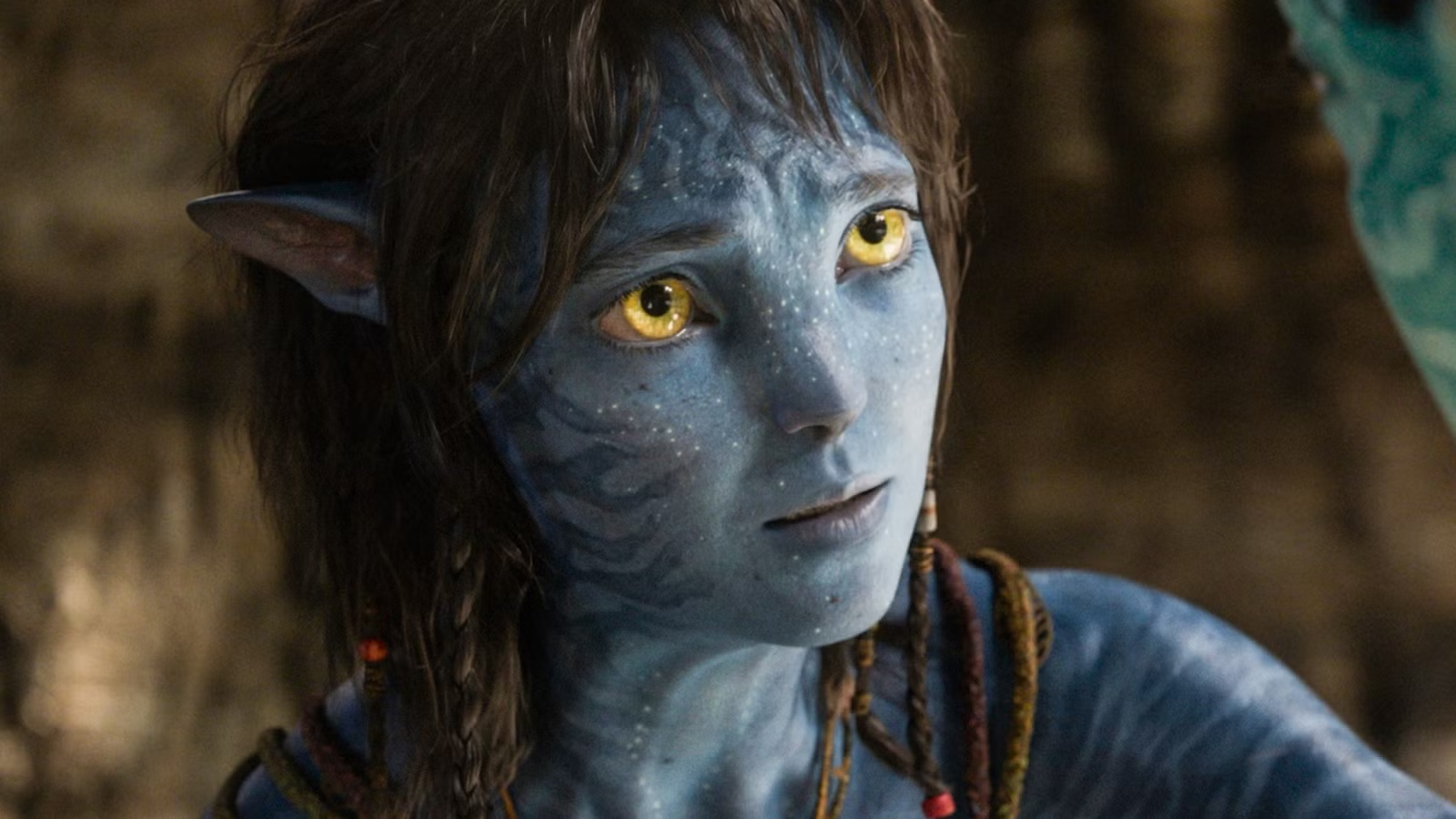
Avatar: Fire and Ash” Falls Short of Expectations, Casting Doubt on Future Sequels
Nearly two months into its theatrical run, Avatar: Fire and Ash, the third installment in James Cameron’s visually groundbreaking Avatar franchise, appears to be reaching the end of its journey with underwhelming results. Although the film is on track to gross around $1.5 billion worldwide — a sum that would still rank it among the highest-grossing films of all time — it is significantly below expectations, especially when compared to the astronomical earnings of its predecessors.
The box office performance of Fire and Ash is a stark contrast to that of the original Avatar, which remains the highest-grossing film in history with a final worldwide haul of over $2.7 billion. Even Avatar: The Way of Water, the second film in the series, outperformed Fire and Ash by grossing more than $2.3 billion globally, securing its place as the third-largest film of all time. With such a sharp drop-off in earnings, the film’s performance has cast a shadow over the future of the Avatar franchise.
The Decline of Expectations for the Franchise
Avatar: Fire and Ash was originally envisioned as the third chapter in a sprawling saga, with plans for at least two more sequels to follow. However, its underperformance has raised doubts about the viability of future installments. In the weeks leading up to the film’s release, James Cameron himself began downplaying the significance of the fourth and fifth films, which had already been scheduled for release by Disney. The acclaimed director cited both budgetary constraints and shifts in the theatrical landscape as reasons for reconsidering the sequels.
Having dedicated more than two decades of his career to the Avatar series, Cameron’s shift in focus has left fans and critics alike wondering about the future direction of the franchise. Despite the film being produced with a massive budget of around $400 million, Fire and Ash has not delivered the financial returns expected of a blockbuster of its scale. The film’s box office haul has been further complicated by weak critical reception, with its Rotten Tomatoes score currently sitting at a modest 66%. Critics have pointed to the movie’s reliance on familiar narrative beats, which, despite its grand visual spectacle, fail to captivate as effectively as the first two films.
The lackluster performance of Fire and Ash has caused some to question whether Disney will continue with the ambitious plans for additional Avatar films or whether the series will be put on indefinite hold. While it’s clear that the Avatar films remain a significant part of Disney’s strategy, the declining box office returns signal potential challenges ahead.
The Shift Away from Premium Sci-Fi Films
The impact of Avatar: Fire and Ash’s box office disappointment can be seen in the context of other high-profile sci-fi franchises that have struggled with similar issues. For instance, the Star Trek franchise faced a similar fate after the release of Star Trek Beyond. The film, directed by Justin Lin, brought back the original cast of the rebooted Star Trek series, including Chris Pine, Zachary Quinto, and Zoe Saldaña. Despite positive reviews and a loyal fanbase, Star Trek Beyond grossed just $350 million worldwide, far below expectations for a blockbuster film with a $185 million production budget.
Star Trek Beyond‘s poor performance at the box office led to the cancellation of any planned follow-up films, a fate that could also befall Avatar if Fire and Ash‘s earnings do not improve. The stark contrast in earnings between the two franchises is telling; Fire and Ash has grossed more than four times the amount of Star Trek Beyond, yet still falls short of the massive success that Cameron’s earlier Avatar films enjoyed. This illustrates the precarious nature of blockbuster filmmaking, where even a multi-billion-dollar franchise can struggle to maintain momentum in an ever-evolving marketplace.
The Changing Landscape of Blockbuster Filmmaking
The underperformance of Avatar: Fire and Ash highlights the shifting dynamics in the entertainment industry, particularly within the blockbuster sector. Rising production costs, changing consumer preferences, and an increasingly competitive media landscape have all contributed to a shift away from traditional tentpole movies. While streaming platforms have expanded their reach, giving audiences more affordable and accessible viewing options, the cost of producing and marketing a blockbuster film continues to rise, placing greater pressure on films to meet or exceed expectations at the box office.
In the case of Avatar: Fire and Ash, the timing of its release has also been a factor. The film’s budget and scope were designed to create an immersive cinematic experience, but it faces competition from other high-profile franchises, streaming services, and shifts in how people consume media. As streaming becomes more dominant, consumers are less inclined to invest in seeing films in theaters, especially when faced with rising ticket prices and an abundance of content available at home.
Moreover, the Avatar franchise’s reliance on cutting-edge technology and visuals may have contributed to its allure in earlier installments, but with the constant evolution of the film industry, there is a question as to whether the same approach can continue to generate the same level of excitement. The failure of Fire and Ash to capture the same box office results as its predecessors may suggest that even the most visually stunning films can fall short if they fail to offer fresh or compelling narratives.
Can the Future of Avatar Be Saved?
While the outcome of Avatar: Fire and Ash has raised questions about the viability of future sequels, it remains unclear what direction James Cameron and Disney will take. The fate of the planned fourth and fifth installments is still uncertain, and many are waiting to see if Fire and Ash’s underperformance leads to a reevaluation of the Avatar franchise’s future.
For now, it seems that the series is at a crossroads. While Avatar continues to be a beloved franchise with a massive fanbase, its latest installment’s struggles at the box office demonstrate that even the most iconic franchises are not immune to changing market conditions. The next few months could prove crucial for the Avatar saga, as both Disney and Cameron will need to decide whether to press forward with their planned sequels or to pivot away from what had once been an unstoppable cinematic phenomenon.