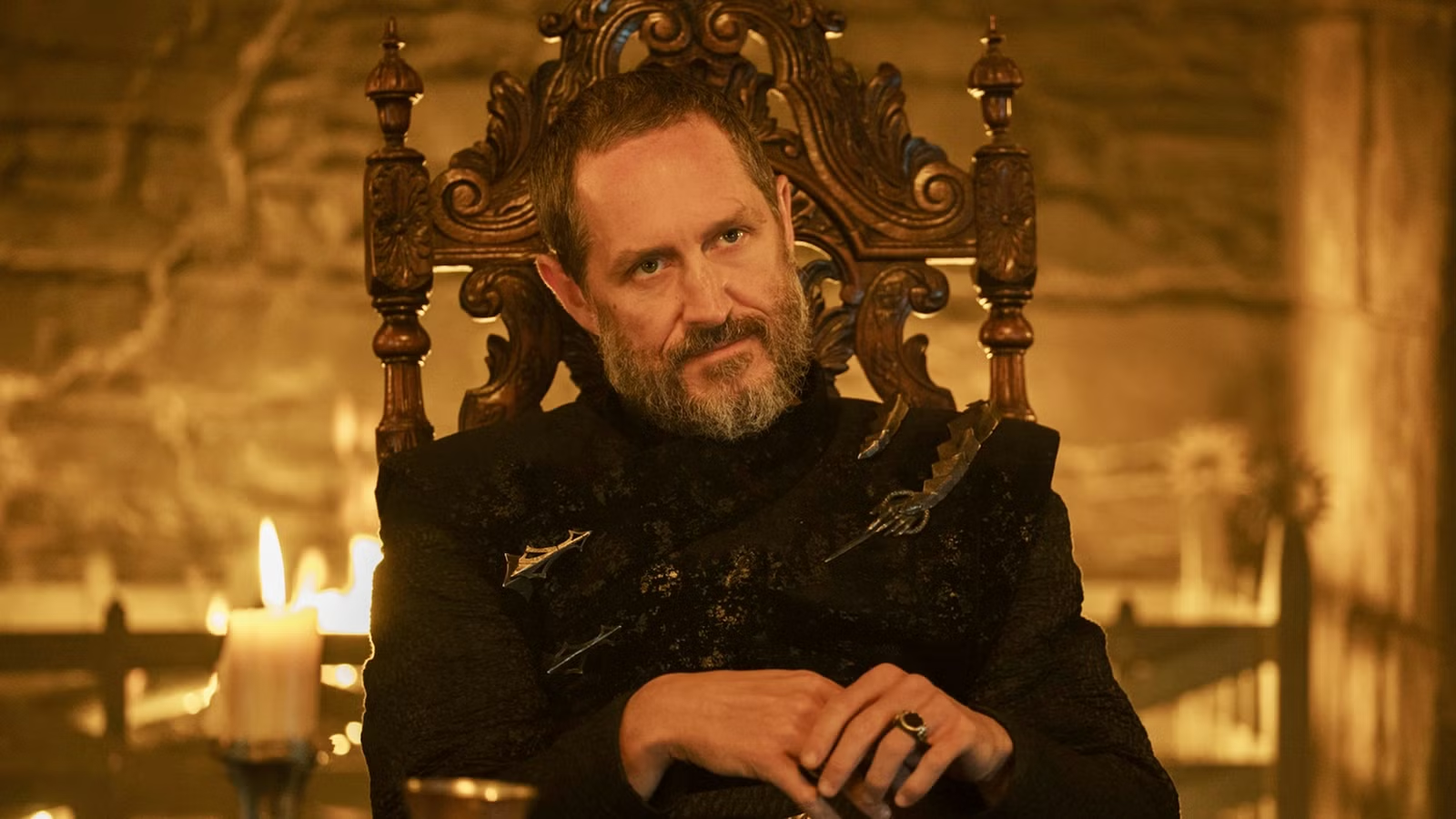
Bertie Carvel Reflects on Baelor Targaryen’s Fate and the Abandoned Trial of Seven Fight in A Knight of the Seven Kingdoms
In the world of A Knight of the Seven Kingdoms, where political intrigue and family dynamics often take center stage, one of the most emotionally charged moments occurs when Baelor Targaryen, played by Bertie Carvel, steps into the Trial of Seven. The anticipated showdown between Baelor and his brother, Maekar Targaryen, never materializes, leaving fans wondering about the decision to leave out what could have been a pivotal moment in the series. In a recent interview, Carvel opens up about his character’s true nature, the moral weight of his actions, and the absence of the dramatic fight that had been expected by viewers.
Baelor Targaryen: A Chivalrous and Noble Character
Baelor’s character stands in stark contrast to many of his Targaryen relatives, known for their complex and often morally ambiguous actions. Baelor is portrayed as noble and chivalrous, embodying ideals of honor that resonate deeply within the world of A Knight of the Seven Kingdoms. For Carvel, portraying this character wasn’t just about showing his good nature but about capturing the duality inherent in every person.
When asked about Baelor’s chivalric ideals, Carvel reveals that he doesn’t believe in a strictly “good” or “bad” nature in characters. Instead, he believes that character is defined by actions. “Baelor does not know that he will do the right thing from one moment to the next,” Carvel explains. “What makes him exciting is the tension between his potential for greatness and his human flaws. He can be both a warm embrace and a harsh blow. The story is about the choices he makes.”
Baelor’s willingness to embody both sides of Targaryen nature — compassionate yet capable of destructive force — adds a layer of moral complexity to his character. This complexity makes his role in the story more profound, as it forces the audience to question whether Baelor will act on his nobler impulses or succumb to the chaos that surrounds him.
The Anticipated Trial of Seven: What Could Have Been
Fans of A Knight of the Seven Kingdoms were eagerly awaiting the Trial of Seven, a dramatic and violent ritual that could settle the long-standing feud between Dunk (played by Peter Claffey) and Aerion (Finn Bennett). The stage was set for a thrilling, high-stakes battle, especially when Baelor, amidst his brothers and allies, entered the fray. Yet, as Episode 5 unfolds, it becomes clear that we are not meant to witness Baelor in a direct confrontation with Maekar, his father.
Carvel sheds light on the decision not to show Baelor in a physical fight with Maekar, especially considering that the audience had been primed for a confrontation. “There was a fleeting moment we shot, where Maekar strikes Baelor, but that moment didn’t make it into the final cut. It was likely omitted because it would have spoiled what comes next in the storyline,” Carvel explains. He emphasizes that the perspective of the show remains firmly with Dunk, whose journey is at the center of the story, rather than Baelor’s tragic demise.
The absence of the Trial of Seven fight between the brothers leaves a significant gap in the emotional weight of the episode. While the buildup had suggested a dramatic family conflict, the shift in focus to Dunk’s perspective changes the tone and trajectory of the narrative. The show’s creators chose not to focus on the anticipated combat, but rather on Dunk’s evolving role and the larger narrative arc.
Dunk’s Perspective: Why Baelor’s Fate Is Not His Story
The choice to remain with Dunk through the pivotal moments of the Trial of Seven was a deliberate one. Carvel reflects on the narrative structure of A Knight of the Seven Kingdoms, saying, “We’ve gotten used to a universe where no one character is the sole protagonist. George R.R. Martin’s storytelling constantly shifts the point of view. In this story, however, we stay with Dunk.”
This focus on Dunk’s point of view helps to maintain a sense of tension and unpredictability, as it allows the audience to experience events through his eyes, rather than through Baelor’s. Dunk, a character who embodies both nobility and personal flaws, is more aligned with the audience’s perspective. The choice not to show the full extent of Baelor’s fight with his family members underscores this shift. Carvel elaborates, “We don’t know exactly where Baelor fits in this narrative. What makes his story compelling is the uncertainty of his choices.”
The Moral Complexity of Baelor’s Final Moments
Baelor’s death, ultimately, is marked by a significant moment of dramatic irony. As he removes his helmet after being struck by Maekar, his body falls lifelessly to the ground, signaling the tragic end of his character arc. This moment, while tragic, serves as a final statement on Baelor’s noble character. His sacrifice reflects the tragic potential of the Targaryen family, a lineage marked by both greatness and tragedy.
Carvel views Baelor’s final act as a symbol of personal choice: “Baelor chooses to fight for what he believes in, but ultimately, his fate is decided by the actions of those around him. His death is not about the inherent goodness of his character but the consequences of the violent world in which he lives.” In this sense, Baelor’s death becomes a reflection of the moral ambiguities that run through the veins of the Targaryen dynasty, where noble intentions often lead to disastrous outcomes.
Looking Ahead: The Targaryen Legacy and Dunk’s Path
While Baelor’s death leaves a void in the story, it sets the stage for Dunk’s continued growth and evolution. Carvel’s portrayal of Baelor serves to highlight the tragic cost of chivalry in a world defined by cynicism and moral relativism. In many ways, Baelor’s story is a cautionary tale about the perils of adhering too strictly to ideals in a world that rewards pragmatism over principle.
As the series progresses, Dunk’s journey will continue to explore the complexity of knighthood, loyalty, and moral decision-making. Carvel believes that the absence of the Trial of Seven fight does not diminish Baelor’s role in the larger narrative. Instead, it adds to the weight of Dunk’s decisions, as he must carry the lessons of those who have fallen before him — including the well-meaning but ultimately tragic Baelor.
The larger narrative of A Knight of the Seven Kingdoms revolves around the idea of choice and consequence, a theme that resonates throughout the lives of the Targaryens. Baelor’s decision to enter the Trial of Seven and his eventual death serve as a poignant reminder of the unpredictable nature of fate in the world of Westeros.