Dark Winds Showrunner Reveals the Complexities Behind Season 4’s New Villain and Shifting Dynamics
As Dark Winds enters its fourth season, the stakes have never been higher. The show’s intense premiere and its thrilling new villain have left fans eager for more, especially with the arrival of Irene Vaggan, portrayed by Franka Potente. Showrunner John Wirth recently sat down to discuss the evolution of the series, the dynamic between returning characters, and the creation of Vaggan — a deeply unsettling antagonist who brings a chilling new layer to the series.
Shifting Dynamics: The Evolution of Leaphorn, Chee, and Manuelito
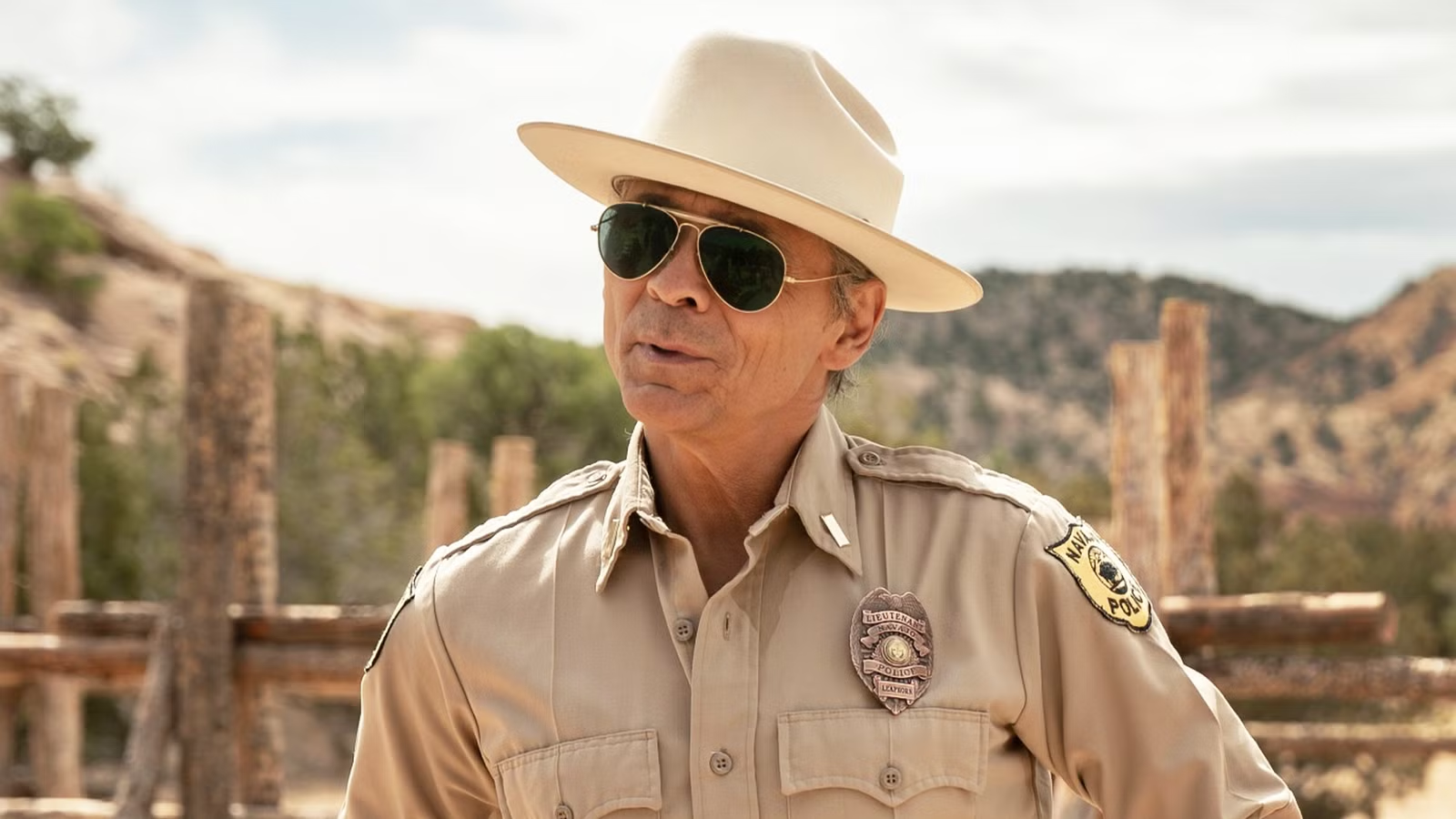
For Dark Winds fans, the return of Leaphorn (Zahn McClarnon), Chee (Kiowa Gordon), and Manuelito (Jessica Matten) in Season 4 is a much-anticipated reunion, as the trio was separated in earlier seasons. With their reformation in the premiere, it’s clear that their relationships have changed and developed over time. According to Wirth, this shift in dynamic was important to explore.
Wirth notes, “There’s a natural evolution of their relationships. Leaphorn’s internal conflict regarding his potential retirement and his thoughts on succession add an interesting layer to the show. He’s evaluating who might step into his shoes, and that raises the stakes for Chee and Manuelito, both of whom have equal standing in the police department. This scenario sets up a lot of drama for the season, adding tension between these characters.”
Taking the characters out of their familiar Navajo surroundings and placing them in Los Angeles further intensifies the tension. While Chee and Manuelito have both lived in cities before, their deep-rooted connection to the land remains a significant part of their identities. Wirth explains that the contrast between the bustling city and the quietude of the Navajo Nation is essential for the show’s exploration of cultural identity. He states, “The Navajo are incredibly connected to the land in a way that most outsiders cannot comprehend. Taking them out of that environment and into Los Angeles adds an element of danger and mistrust between the characters, which makes for compelling drama.”
Irene Vaggan: The Villain That Disrupts the Status Quo
While the evolving relationships between the main characters are central to Season 4, a new, terrifying antagonist takes center stage in the form of Irene Vaggan, played by Franka Potente. Wirth describes Vaggan as a deeply disturbed and dangerous individual, explaining that she is both a sociopath and a psychopath. Her presence in the series brings a new level of unpredictability, making her one of the most menacing villains Dark Winds has seen.
Wirth compares Vaggan to Colton Wolf, another villain in the series, but emphasizes that Vaggan is different. “She’s demented. Franka really got her teeth into the role. She loves playing bad guys because they’re so interesting, so broken, and dysfunctional,” he says. This characterization is a stark contrast to the often morally ambiguous figures in the Dark Winds universe, such as the Tso family and even the show’s protagonists at times. Vaggan’s unhinged nature and her dark motivations add a sense of urgency to the season, and fans can expect her to challenge Leaphorn, Chee, and Manuelito in ways they’ve never been tested before.
Irene Vaggan’s Origins: A Backstory Rooted in Conflict and Obsession
Vaggan’s backstory plays a critical role in her motivations throughout the season. Born into a family with deep Nazi ties, Vaggan was raised in Germany during World War II, which influenced her worldview and ultimately brought her to the American Southwest. “We created a detailed backstory for her,” Wirth reveals. “Her father was a Nazi, and her grandfather, who now lives with her, was also a Nazi. That’s a huge part of her character and the dark energy she brings to the show.”
As the story progresses, Vaggan’s obsession with Native American culture grows, particularly with the lives of warriors in the Southwest. She finds herself fixated on the mythos of Native American history, which becomes a driving force behind her actions. This obsession is rooted in her early days as a young woman, reading books by Karl May, a German author who wrote fantastical tales about the American West. “Her family emigrated to South America and then later to California, where she first encountered Native American culture,” says Wirth. “This obsession builds as she works with an urban gang leader and ultimately lands in the Navajo Nation, where her fantasy comes to life when she encounters Joe Leaphorn.”
The moment Vaggan lays eyes on Leaphorn is pivotal, marking the start of her obsessive pursuit of him. Wirth describes this dynamic as both thrilling and dangerous, with Vaggan’s fixation growing stronger as the season progresses. The psychological tension that builds between Vaggan and Leaphorn is one of the central conflicts of the season, with her demented desire to claim him adding an unsettling layer to the show’s exploration of obsession and power.
Expanding the World of Dark Winds: Adapting Hillerman’s Novels
As the series moves further from the Navajo Nation, the question arises: how does Dark Winds continue to adapt the novels of Tony Hillerman while maintaining its identity as a television show? Wirth explains that adapting Hillerman’s work is a complex and creative process. “The novels are challenging to adapt because they don’t always translate directly to the screen. We do a lot of invention to make the stories fit into our vision for the show,” he says.
For example, in Season 4, the show takes elements from The Ghostway, a novel in which Leaphorn plays a smaller role. Wirth wanted to explore the California setting of the book, which led to the decision to take the characters out of their familiar environment. “I wanted to bring the show to a place where the audience wouldn’t expect it, and then return the characters to their homeland by the end of the season. It felt right for the rhythm of the show,” Wirth shares.
The challenge, however, lies in balancing Hillerman’s narrative structure with the need to create a compelling television series. As Wirth continues to adapt Hillerman’s work, he finds himself working closely with Zahn McClarnon, who plays Leaphorn. McClarnon’s input plays a crucial role in shaping the direction of the story, particularly when it comes to choosing which novel to adapt each season. “Zahn has a lot of influence on the process, and his perspective is invaluable,” Wirth adds.
Navigating the Complexities of Adapting Crime Fiction
Dark Winds continues to stand out as a neo-Western thriller that blends crime, cultural identity, and psychological drama. With the arrival of Irene Vaggan and the shifting dynamics of the main characters, Season 4 promises to be the most intense yet. As the characters grapple with their identities and face off against dangerous new adversaries, the show’s complex exploration of morality and obsession is sure to captivate audiences. The blend of Hillerman’s world with Wirth’s vision for the series ensures that Dark Winds remains a fresh and compelling addition to the world of television crime drama.