The Voices Behind HUNTR/X: How KPop Demon Hunters Turned Three Actresses Into Global Icons
When KPop Demon Hunters premiered, few predicted the scale of its cultural impact. The animated feature quickly evolved from a highly anticipated Netflix release into a global phenomenon. It shattered streaming records, ignited fan communities across continents, and even secured Oscar nominations. At the heart of its success stands HUNTR/X, the fictional K-pop trio battling supernatural forces. Behind those animated heroines are three performers whose voices and lived experiences helped transform the project into something far more personal and powerful.
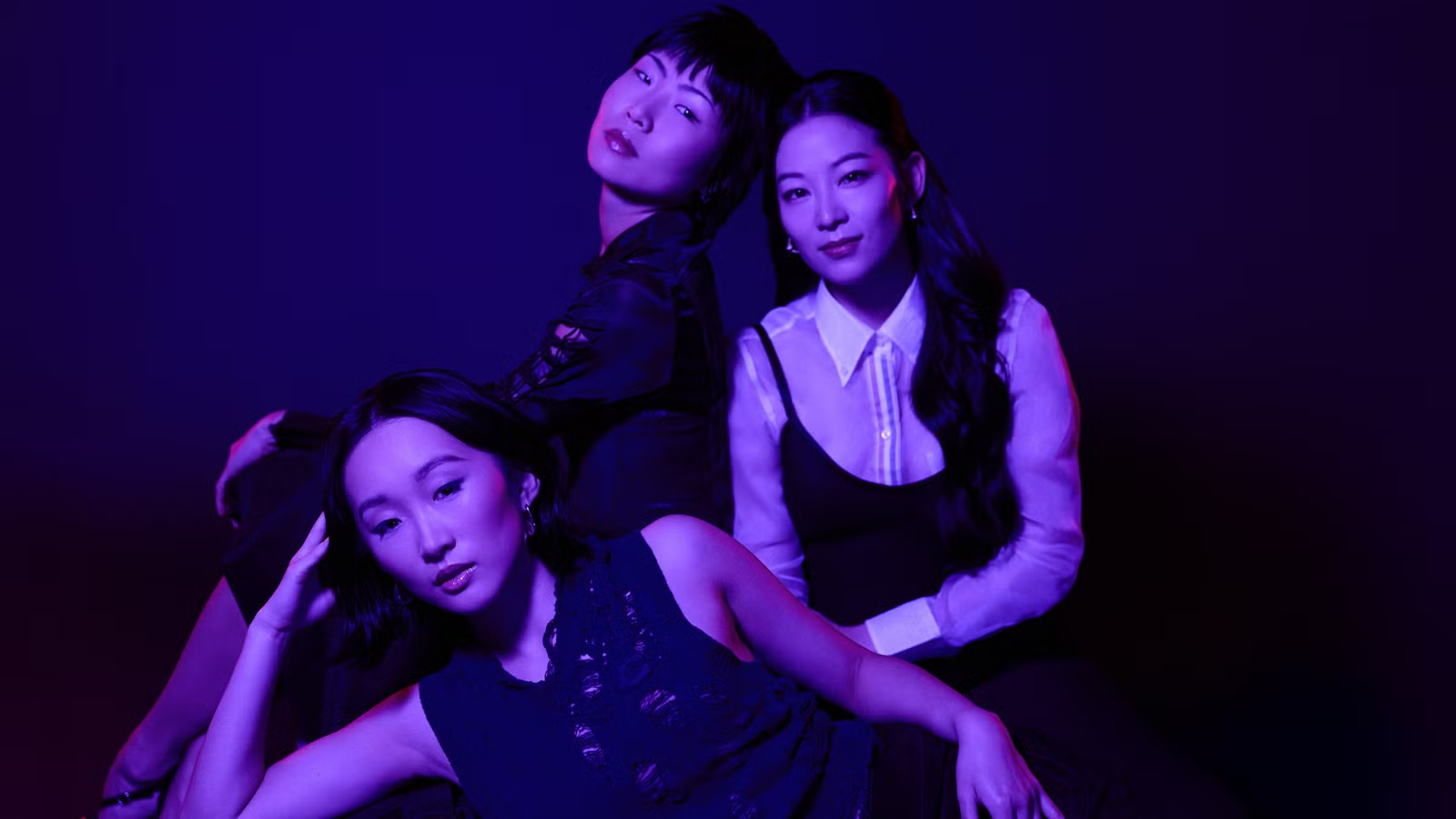
Arden Cho, May Hong, and Ji-young Yoo do more than lend dialogue to Rumi, Mira, and Zoey. They embody them. During interviews, their natural chemistry mirrors the dynamic energy of the group itself. Cho radiates poised leadership similar to Rumi’s commanding presence. Hong channels Mira’s rebellious cool with effortless wit. Yoo reflects Zoey’s infectious enthusiasm and emotional openness. Their synergy feels authentic rather than manufactured, and that authenticity has become central to the film’s resonance.
Personal Histories That Shaped the Performances
Each actress brought elements of her own upbringing into the booth. For Cho, voicing Rumi tapped into memories of navigating identity as a first-generation Korean American raised in a traditional household. She understood the tension between personal creativity and cultural expectations. That tension surfaces throughout Rumi’s journey as she struggles to balance perfection, loyalty, and independence.
Cho has spoken openly about how the character’s relationship with her adoptive mother struck a deeply emotional chord. Scenes exploring control, protection, and misunderstanding felt familiar. Instead of distancing herself from those parallels, she leaned into them. The result gave Rumi vulnerability beneath her polished exterior.
Hong found a similar emotional anchor in Mira. Raised by a strict father, she recognized the frustration and defiance woven into Mira’s arc. The character’s rebellion stems from confusion as much as anger, and Hong understood that duality. While she has since found healing within her own family, she drew from earlier memories of feeling constrained. That rawness sharpened Mira’s edge without stripping away her humanity.
Yoo connected strongly to Zoey’s sense of dual identity. As the daughter of Korean immigrants, she grew up navigating multiple cultural spaces. Zoey’s feeling of being split between worlds required little invention. Yoo also admitted she shares Zoey’s instinct to please others, a trait that can exhaust but also empower. She embraced the idea that gentleness can be a form of strength.
Artistic Roots and Unexpected Paths
Interestingly, none of the three initially envisioned voice acting as their ultimate destination. Cho once felt pulled toward music, inspired by first-generation K-pop acts long before global streaming made them accessible. Hong trained in visual arts and even built an impressive portfolio as a teenager to gain admission into a competitive performing arts high school. Yoo once dreamed of becoming a professional dancer before pivoting to acting.
These varied artistic foundations enriched their approach. Hong’s modeling career taught her control over physical presence, though voice acting required her to shed visual performance entirely. Yoo’s early experiences in loop group recording and minor voice roles gave her technical familiarity with studio rhythm. Cho relied heavily on music playlists to summon Rumi’s fierce energy when she needed to access leadership or authority.
Inside the Recording Booth
Voice work may appear less demanding than on-screen acting, but the trio quickly learned otherwise. Recording sessions demanded physical stamina. Efforts such as battle cries, gasps, growls, and comedic sound effects required repetition and intensity. Authentic eating sounds meant actually eating. Jumping, panting, and vocal strain often followed.
Cho once described recording both food sequences and strenuous vocal efforts in a single day. The combination left her physically drained. Yoo faced the unexpected challenge of producing Zoey’s now-iconic battle caw. Directors asked her to imagine a bird preparing for combat, a request that felt absurd until it became unforgettable. Hong especially enjoyed the exaggerated growls between her character and other figures, moments that frequently dissolved the recording team into laughter.
Cameras inside the booth added another layer of vulnerability. Animators studied their facial expressions to refine the characters’ movements. That meant every warm-up, every self-critical moment, and every offhand gesture could shape the final animation. Though intimidating at first, the actresses later recognized subtle quirks of themselves embedded within the characters.
A Global Reaction Beyond Expectation
None of them anticipated the magnitude of response. The film reached audiences across generations and continents. Children memorized dialogue. Parents requested personalized video messages. Celebrities openly praised the production. Industry veterans welcomed them into the voice acting community with encouragement about the longevity of animated roles.
Fans expressed gratitude for representation. Hong learned that many viewers felt empowered by hearing a lower-toned female voice lead in animation. Yoo received stories from young viewers who felt more confident embracing their individuality after watching Zoey’s journey. Cho described meeting fellow performers who shared that their own children watched the film repeatedly.
The phenomenon extended beyond social media. Award recognition cemented its legitimacy within the broader entertainment industry. Yet the trio often speaks about how the personal messages resonate most deeply. For them, the impact lies not just in record-breaking metrics but in the connections forged between voice and viewer.
Chemistry That Translates On and Off Screen
Their friendship remains one of the film’s secret weapons. During press tours, they finish one another’s thoughts and celebrate each other’s milestones. That camaraderie translates into vocal interplay that feels organic rather than scripted. Animation can exaggerate action, but emotional authenticity requires trust among performers.
As KPop Demon Hunters continues to expand its cultural footprint, Cho, Hong, and Yoo stand as proof that voice acting demands as much emotional honesty as any on-camera performance. Through shared heritage, artistic resilience, and fearless vulnerability in the recording booth, they transformed a genre-blending animated film into a worldwide cultural touchstone.